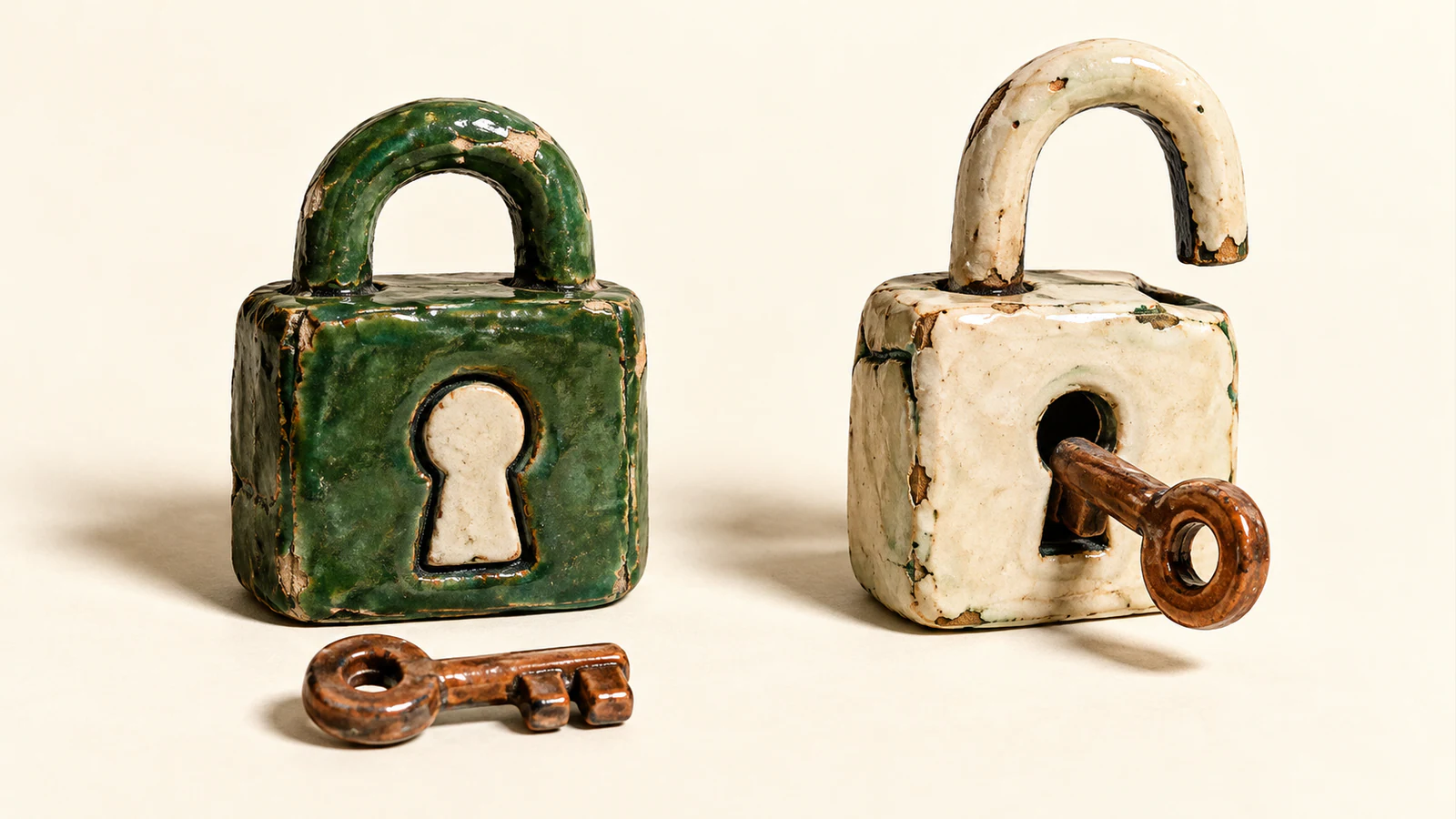
If your users reach services through mainstream browsers, the eMudhra compromise is largely already handled for you: Chrome blocked the affected intermediates on October 17, 2026, and Certificate Transparency enforcement means fraudulent certificates from these intermediates could not have been trusted by default in CT-enforcing browsers. The clients that should worry you are the ones that do neither of those things: backend libraries, command-line tools, mobile apps, embedded stacks and appliances that trust whatever bundle they shipped with and never check revocation. Those clients remain forgeable until someone, probably you, updates their trust stores.
One caveat before the details, because it shapes how much weight the details can bear: the exploitation telemetry and the patching figures are vendor-reported, drawn from Cloudflare’s own network. The weak-key values, which Cloudflare also published, did not come from that network: anyone could recover them from the public certificates, as the original reporter demonstrated to the root programs on October 17, before Cloudflare learned of the compromise on October 19. The timeline analysis is published by a CT-log index site, and a community-run tracker aggregates which trust stores have shipped fixes. eMudhra’s account of how this happened is its own, and it has not shared the key-generation script that would let anyone verify it. Where a finding below rests on one party’s telemetry or self-report, I say so.
What broke: eight intermediates, one keyed to the integer 4
The compromise-tracking page maintained for the incident states the core fact plainly: “The private keys of eight eMudhra intermediate CA certificates have been compromised. They chain to roots trusted by the Mozilla, Microsoft, Apple and Chrome root programs and by many downstream trust stores.”
The way they were compromised is the unusual part. These were not stolen keys or an HSM breach. Cloudflare’s analysis puts it bluntly: “where eMudhra was trusted to pick a 115-digit number for their virtual combination lock protecting the Internet, they picked the number 4. Not even four digits, just the number 4. The other seven keys were similarly weak: 56, 66, 115, 155, 156, 230 and 237.”
Those numbers are the private keys. Because the secret values are small enough to enumerate, anyone can reconstruct each private key directly from the public certificate, no breach required. The incident page confirms: “The private keys for the intermediate certificates were incorrectly generated by the CA. This means that anyone can recover them from the certificates.” The next paragraph adds: “This would have been possible since the certificates were created in April 2025.” That last sentence defines the exposure window: the keys have been recoverable from public data for roughly eighteen months before disclosure.
The consequence, per Cloudflare’s disclosure: “Because the keys themselves are weak, an attacker can create a forged certificate for any domain and use it to impersonate servers to intercept or modify traffic.” Any domain. Any unpatched client that trusts the chain.
Why the weakness was invisible, and why that matters
If you pulled one of these intermediates into a certificate viewer, nothing looked wrong. The sevydevy technical explainer notes the keys were genuine P-384 elliptic-curve keys, displayed by tools as 384-bit, yet each secret scalar was below 256. Key safety depends on the private key being drawn from a good random source, and that property cannot be verified from outside. A linting pass or automated certificate audit checking curve, size and validity periods would have passed these certificates cleanly.
This is worth internalizing because it generalizes: “the certificate looks valid” and “the key was generated correctly” are independent claims, and the public certificate system has no mechanism to check the second one. eMudhra’s failure was caught because the resulting keys were so weak they attracted attention. A subtler generation flaw, a biased RNG rather than a single-digit secret, would not have been.
The timeline, compressed into four days
The public sequence moved fast:
- April 2025: the certificates are created with recoverable keys. Exposure begins, silently.
- October 17, 2026, 19:45 UTC: Chrome lands a CRLSet update “blocking the SPKI hashes of all six TLS-issuing intermediates; the block also covers the Sectigo cross-certificates, which carry the same keys.”
- October 18: eMudhra revokes its eight intermediates.
- October 19: Cloudflare becomes aware of the compromise and begins assessment.
- October 20: public disclosure. Cloudflare publishes its disclosure post the day after becoming aware, and Mozilla and Chrome post to dev-security-policy, per the CT-log timeline.
- October 20, 18:19 UTC: Cloudflare observes a forged certificate, “less than an hour after Mozilla’s bug report was made public.”
Two things to notice in the counts. Eight intermediates were compromised; the CT analysis refers to six TLS-issuing intermediates because the other two served other purposes. And the CRLSet block targets SPKI hashes (the public key fingerprints), not certificate serials, which is why it also catches the Sectigo cross-certificates: different certificates, same weak keys. Keep that in mind when you build your own distrust entries, because matching by certificate identity will miss the cross-signs.
Why this is worse than the usual CA compromise playbook
Past CA incidents, the DigiNotar-style intrusions, the misissuance scandals, followed a familiar shape: an attacker with privileged access to CA infrastructure misused it, and the fix was to remove the CA from root programs and revoke what it issued. Painful, but the attacker’s capability ended when the CA’s access did.
A recoverable intermediate key breaks that shape in three ways:
- Anyone can do it. There is no intrusion to detect, no insider to catch. The capability is downloadable from a public certificate.
- It works for any domain. Not the domains the CA happened to issue for, every domain, because the holder of an intermediate private key can mint leaf certificates at will.
- Root-program removal does not end it. Deleting eMudhra’s roots from Mozilla’s store stops new clients from trusting new chains. It does nothing for the existing trust bundles, container images and embedded firmware that already carry the intermediates, and it does nothing to the attacker’s copy of the key.
That third point is the operational heart of the story, and it inverts the usual priority order. In a typical CA compromise, you watch the root programs and wait for your OS vendor. Here, the clients you manage yourself are the ones still exposed after the ecosystem’s fastest actors have already finished.
Who is actually protected, and who is not
The strongest available reassurance comes from the Chrome Root Program, in its dev-security-policy post quoted by the CT-log index: “Because no TLS certificates chaining to these six intermediate CAs were logged to CT prior to our CRLSet block on October 17, no fraudulent certificates issued by these CAs could have been trusted by default in Chrome or other CT-enforcing browsers.” Chrome requires CT-logged certificates for publicly trusted TLS, so a forged certificate that never touched a log would be rejected regardless of the CRLSet. That argument covers CT-enforcing browsers and, by extension, any client that enforces CT the same way.
Now the gap. The sevydevy explainer states the revocation problem directly: “Revocation only helps clients that check it. eMudhra revoked its eight intermediates on 18 October, and browsers act on their own block lists. Many backend libraries, command-line tools and devices never fetch revocation data. They keep trusting a revoked intermediate until their trust bundle is updated.”
So the October 18 revocation, eMudhra’s own corrective action, is functionally a no-op for exactly the client class most at risk: a Python service with a pinned certifi bundle, a Go binary built months ago with a static root pool, an appliance whose firmware embeds a CA list, an internal CLI that shells out to a TLS library with default settings. None of these enforce CT. Many never fetch CRLs or OCSP. For all of them, a forged certificate chaining to one of the eight weak intermediates still validates, today, against an unpatched bundle.
The audit checklist, keyed to client class
“Should you still trust eMudhra certificates?” resolves into a per-client-class audit rather than a single yes or no. Here is what the evidence means for each class of client you likely operate:
| Client class | Protection already in place | Still exposed? | Action |
|---|---|---|---|
| Chrome and CT-enforcing browsers | CRLSet block (Oct 17) plus CT enforcement; no pre-block fraudulent certs could have been trusted by default | No, per the CT analysis | None beyond normal browser updates |
| Other browsers / OS trust stores | Vendor-managed updates; revocation or blocklists apply where the platform checks them | Only if updates are disabled or the platform skips revocation checks | Confirm auto-update is on; treat managed devices as covered once patched |
| Container base images | None unless the image was rebuilt after mid-October 2026 | Yes: the bundle is frozen at image build time | Rebuild or update the CA bundle; distrust the intermediates by SPKI hash |
Programmatic/API clients (language TLS libraries, pinned bundles like certifi) | None: no CT enforcement, typically no revocation fetching | Yes, until the bundle is updated | Update the trust bundle dependency; add explicit distrust entries by SPKI hash |
| CLI tools and internal machine-to-machine clients | None | Yes | Same as programmatic clients; inventory anything making outbound TLS calls |
| Appliances, embedded firmware, mobile apps with embedded stores | Whatever the vendor ships; often no revocation checking | Yes, until the vendor ships an update | File with the vendor; if the client is yours, push a distrust list |
One implementation note that the evidence supports directly: distrust by SPKI hash, not by certificate serial or subject name. Chrome’s CRLSet block worked that way precisely because the Sectigo cross-certificates carry the same weak keys under different certificate identities, and the same logic applies to your own distrust lists. If you enumerate “the eight intermediates” by certificate, you will miss cross-signs; if you enumerate by public key, you catch every certificate built on the weak key, in whatever store it appears.
Reading Cloudflare’s telemetry as an exposure proxy
Cloudflare’s patching post supplies the most detailed public window into exploitation so far, and it deserves to be read with its limits attached. It is not the only one: the CT-log index documents over 100,000 certificates for google.com signed with these keys, already public, so intercepting the traffic of a client that still trusts the intermediates needs nothing more than one of them. On the reassuring side, Cloudflare states its security review “has not identified active exploitation of this issue on Cloudflare services.” On the alarming side, the same team’s telemetry indicates the keys “appear to have been used to forge certificates within hours of the weakness becoming public”; one of the forged certificates was “dated October 20 at 18:19 UTC, less than an hour after Mozilla’s bug report was made public.”
Hold both at once. Cloudflare’s phrasing, “no evidence of the weak keys being used to intercept Cloudflare’s connections so far,” is a statement about one network’s inbound and outbound traffic, instrumented by that network. It is not evidence about clients nobody is watching: your internal services, your appliances, a competitor’s fleet. Meanwhile the observed forgery within an hour of the Mozilla bug going public tells you forged certificates existed almost as soon as the weakness had a name. If you run non-CT clients, the telemetry supports treating “still unpatched” as “still targetable,” not as “probably fine because nobody has been caught.”
The patching-rate figures in Cloudflare’s post carry the same caveat: they measure what Cloudflare can see from its vantage point. They are a useful proxy for whether the broad fleet is moving, and they are not a global census.
What eMudhra’s exit does and does not fix
eMudhra has announced it is exiting the public CA business and attributes the flaw to a key-generation script mistake, a script it has not shared. Its preliminary account, carried by the CT analysis, describes an approved deviation from the key-generation ceremony to test key wrap/unwrap, in which a flawed code path created a weaker second key pair that was then used by mistake for the certificate signing request because the key labels were similar.
Treat that as a claim, not a finding. Without the script or ceremony records, nobody outside eMudhra can confirm the mechanism, and the mechanism is the part that would tell you whether the same failure mode could have produced weak keys elsewhere. What the exit does settle is forward-looking issuance: there will be no new eMudhra-issued chains to worry about. What it does not touch is the installed base. Every trust bundle that already contains these intermediates keeps trusting them until the bundle changes, regardless of whether the CA still exists. The shutdown removes the vendor; it does not remove the keys, which were public data the whole time.
The verdict
Remove the eMudhra intermediates from every trust store you control, and sequence the work by client class. Browser-facing traffic can wait for the platform updates that have already landed; the CT-enforcement argument and the CRLSet block cover it, on the cited analysis. Container base images, pinned language-level bundles, programmatic API clients, CLI tooling and appliances cannot wait, because nothing in the ecosystem response reaches them: not the root-program removals, not the October 18 revocation they never check, not the CA’s exit. Distrust by SPKI hash so the Sectigo cross-certificates come along.
I would also treat this incident as the forcing function for a broader inventory. The reason a recoverable intermediate is dangerous is that machine-to-machine TLS clients operate without the two safety nets browsers have, CT enforcement and revocation checking, and those clients are usually the least documented part of a fleet. If this audit is the first time you have enumerated which of your services verify certificates against a bundle you actually control, the eMudhra cleanup is the cheap part of the exercise.
Where the evidence runs out: whether any non-CT client has actually been intercepted with these keys is unknown and, given who would have to observe it, may stay unknown. The root cause rests on an unshared script. And the patching picture is one network’s telemetry, useful as a directional proxy and nothing more. Those gaps do not weaken the recommendation; they are why the recommendation lands on the stores you control, since those are the only part of the problem you can close yourself.
Frequently Asked Questions
Which clients remain exposed to eMudhra weak keys after the leak?
The clients that should worry you are the ones that do neither of those things: backend libraries, command-line tools, mobile apps, embedded stacks and appliances that trust whatever bundle they shipped with and never check revocation. Those clients remain forgeable until someone, probably you, updates their trust stores.
How should you distrust the compromised eMudhra intermediates?
One implementation note that the evidence supports directly: distrust by SPKI hash, not by certificate serial or subject name. Chrome’s CRLSet block worked that way precisely because the Sectigo cross-certificates carry the same weak keys under different certificate identities, and the same logic applies to your own distrust lists. If you enumerate “the eight intermediates” by certificate, you will miss cross-signs; if you enumerate by public key, you catch every certificate built on the weak key, in whatever store it appears.
Does removing eMudhra from root programs fix existing trust bundles?
What the exit does settle is forward-looking issuance: there will be no new eMudhra-issued chains to worry about. What it does not touch is the installed base. Every trust bundle that already contains these intermediates keeps trusting them until the bundle changes, regardless of whether the CA still exists. The shutdown removes the vendor; it does not remove the keys, which were public data the whole time.

Join the discussion
Share a useful perspective or ask a question about this article.