Running LLMs in the Browser: Can Privacy Be Verified Instead of Promised?
Browser LLM inference is local but not private. The host page controls the GPU, model bytes, and network egress, making 'data never leaves device' a policy promise, not a ver
The archive · Page 2 of 7
The serving stack, network fabric, and cloud-account substrate beneath production AI, where every throughput claim collides with rebuild windows, egress invoices, and control-plane risk.
25–48 of 145 articles · Newest first
Browser LLM inference is local but not private. The host page controls the GPU, model bytes, and network egress, making 'data never leaves device' a policy promise, not a ver
Cloudflare's bundled bot defense changes procurement math, but efficacy claims remain self-reported. Audit standalone spend and measure false positives before migrating.

Cloudflare's zstd cache proposal trades storage for CPU. We verify the math: zstd saves 5% over gzip but only 0.45% over brotli, while non-zstd clients pay a 10ms re-encode.
Cloudflare's agent directory proposal shifts identity burden to operators. With 20% of the web behind its network, unlisted agents face default blocking or per-route charges,
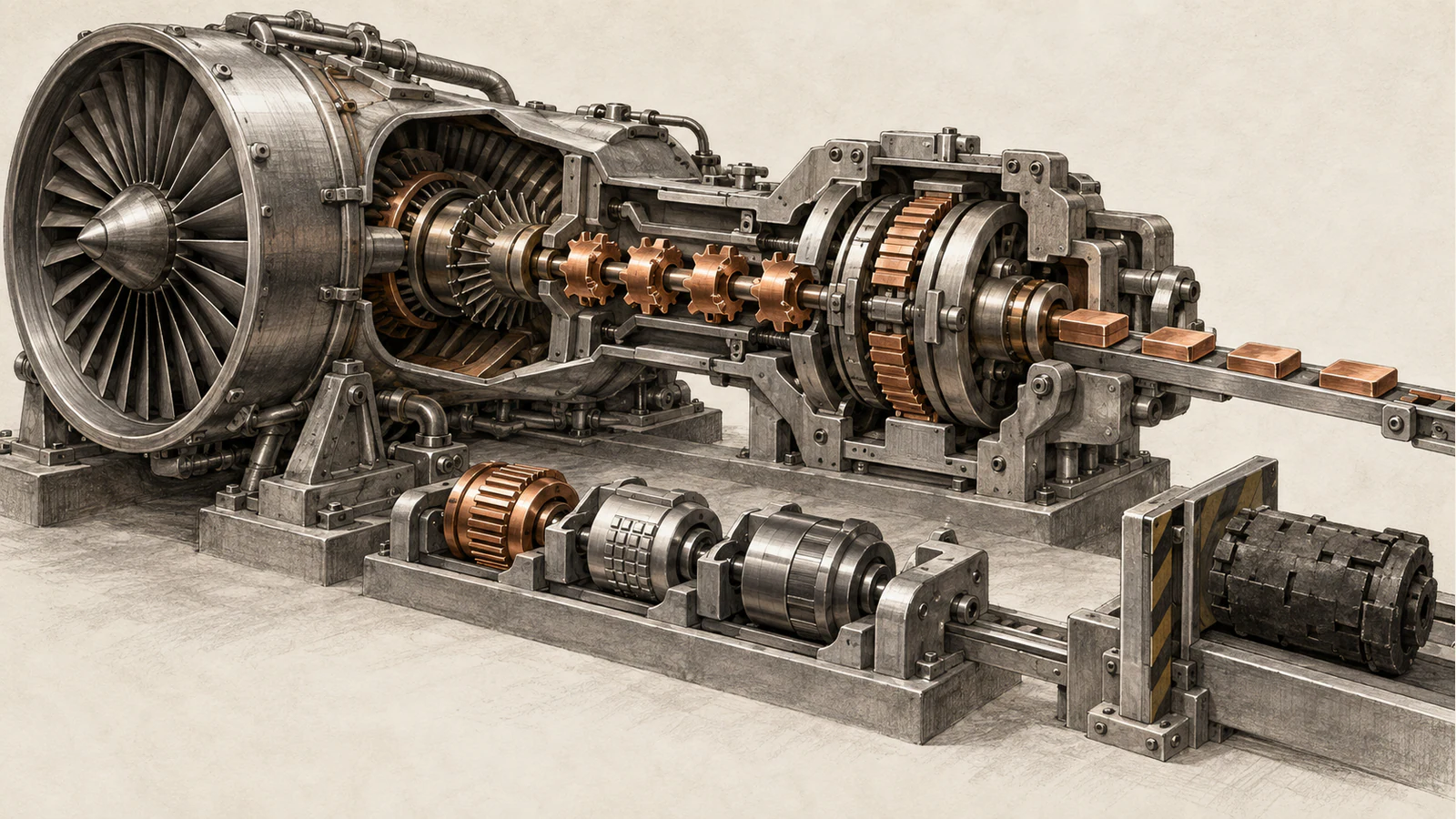
GLM-5.2 on vLLM v0.28.0: enable MTP, fix k_norm warnings, and verify FP8 precision. Measured gains from research on other models, not GLM-5.2.
KubeCap automates Kubernetes capability minimization via LLM-inferred rules, cutting permissions by 55% in Go workloads. Validate inferred drops against runtime behavior to CI
Alibaba's ScaleSense uses learned query-level estimation to cut AnalyticDB costs by up to 5.22x. This audit covers the risks of opaque autoscalers and the limits of vendor-own
A founder's Cognito postmortem highlights hidden auth costs. This guide maps decision axes for startups, separating verified AWS capabilities from unverified customization and
Cloudflare claims 100 TB saved in 1.1.1.1 cache, but the mechanism is unverified. Operators can cut memory now by tuning Redis eviction policies and admission controls, not by
Flat RAG fails on similar-document corpora due to scope confusion and entity conflicts. HiQA proposes hierarchical augmentation, but hybrid retrieval remains the cheaper, unme
A user-reported 10x charge on AWS Bedrock remains unconfirmed by OpenAI or AWS. This runbook reconciles Codex client logs against provider metering to isolate cache misses, or
Cloudflare claims FedRAMP Class D status, but the Marketplace shows no listing. This guide maps edge security layers to impact levels and compares latency costs for.
LLM decode speed tracks memory bandwidth, not TFLOPS. When VRAM fills, reads shift to PCIe, causing a throughput cliff. Use this bandwidth budget worksheet to plan KV cache.
Cloudflare's task-based OAuth consent moves authorization from install time to runtime. Compare blast radius, revocation, and fatigue to redesign agent API security.
Cloudflare's 2026 Spectre revisit is unverified. This guide maps V8 isolates, Firecracker microVMs, and Wasm sandboxes to define a data-classification rule for edge secrets.
SLAI T-Rex reports 34.22% MFU for full-parameter DeepSeek-V4 post-training on Ascend. The single-cluster result narrows the CUDA moat for fine-tuning, but cost data remains.
Cloudflare's WebMCP proposal is unverified, but the MCP ecosystem is not. With 91.8% of servers unauthenticated, treat agent endpoints as strict APIs, not crawler extensions.
Cloudflare's AI Search lacks verifiable pricing and access control docs. For Postgres 13+ teams, pgvector offers a documented, self-hosted alternative that avoids vendor.
Cloudflare's H1 2026 DDoS report claims DNS floods exceeded 1 Tbps. This article verifies the structural risks of UDP amplification and anycast absorption, while noting the.
The daVinci-kernel preprint argues RL-tuned CUDA kernels plateau because skill libraries are mis-architected, not because rewards are mis-shaped. It co-evolves skill.
A cloud-native architecture packages conformal prediction as a sub-2ms microservice to replace raw logprob confidence with finite-sample coverage guarantees, gated by.
Cloudflare ships per-route AI crawler controls for Search, Agent, and Training bots. Site owners must model pay-per-crawl yield against ad inventory and measure Agent.
DBOS benchmarks suggest Postgres LISTEN/NOTIFY handles high fan-out, but the 2026-07-24 data remains unverified. Use durable queues for small payloads, but keep Redis for.
Tailscale on Azure VMs silently falls back to DERP relays when direct paths fail, adding latency and egress costs. Measure direct success rates to avoid hidden bills.